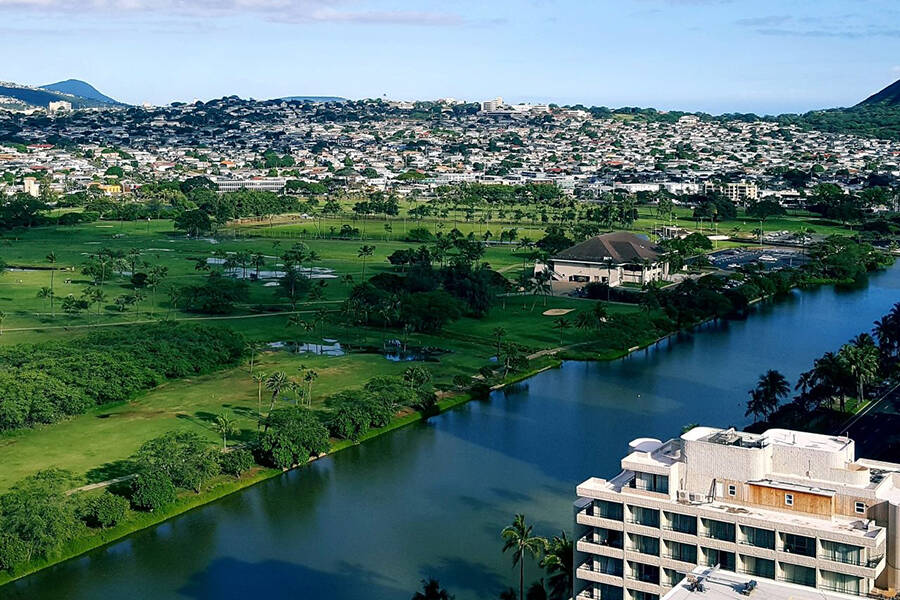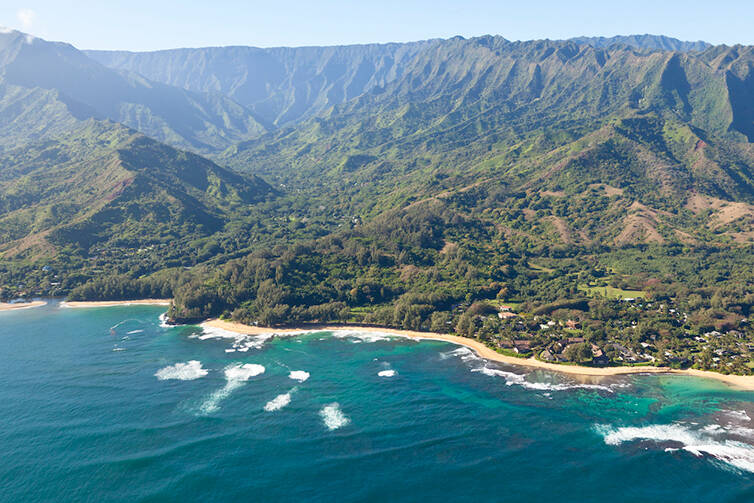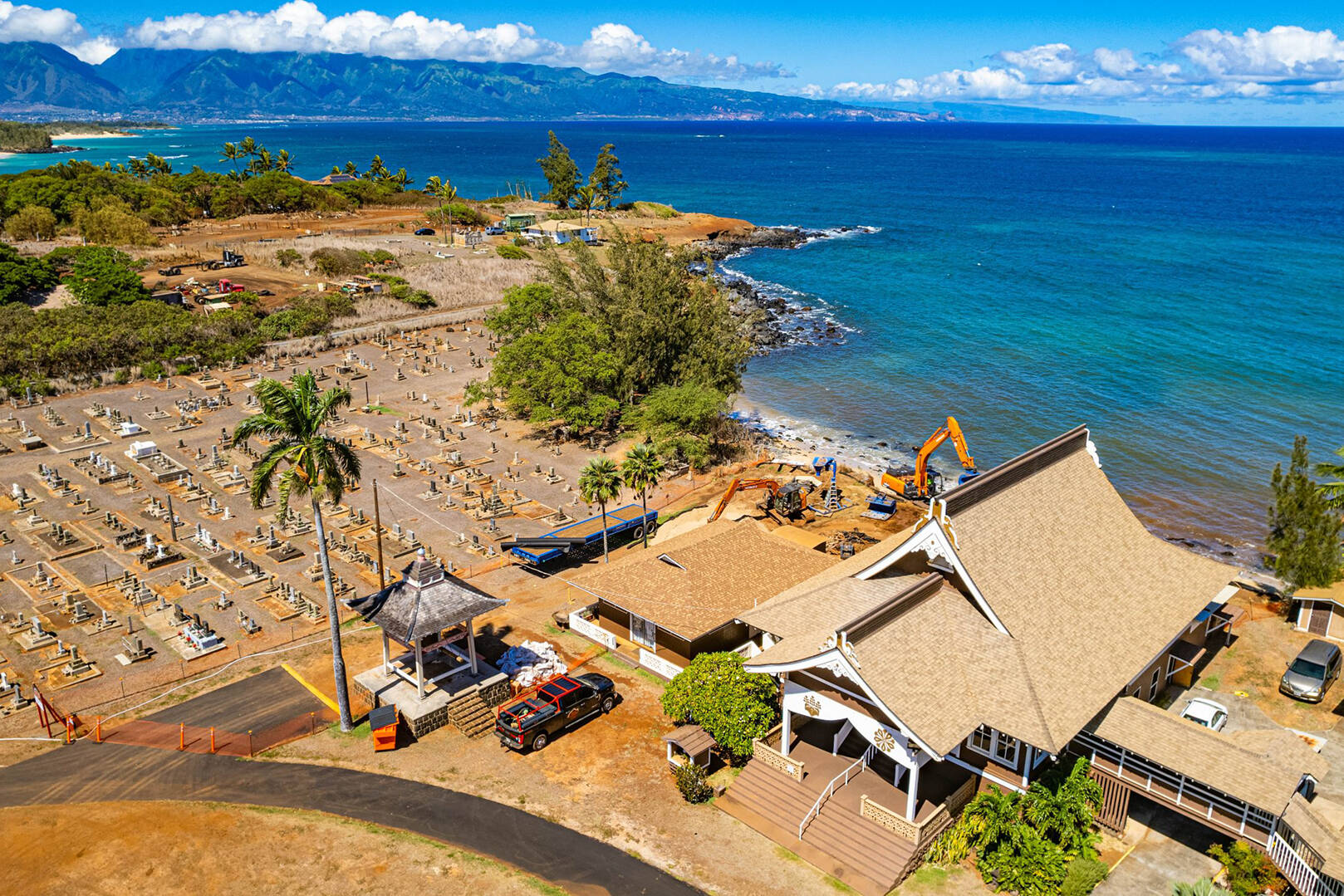

Oceanit worked with the community and conducted an Environmental Impact Study to prevent erosion on Kahana Bay on Maui.
In partnership with

The Maui County Planning Department, SeaGrant, KBSC, and Oceanit form the Kahana Bay Steering Committee (KBSC).
01
An inflection point for erosion
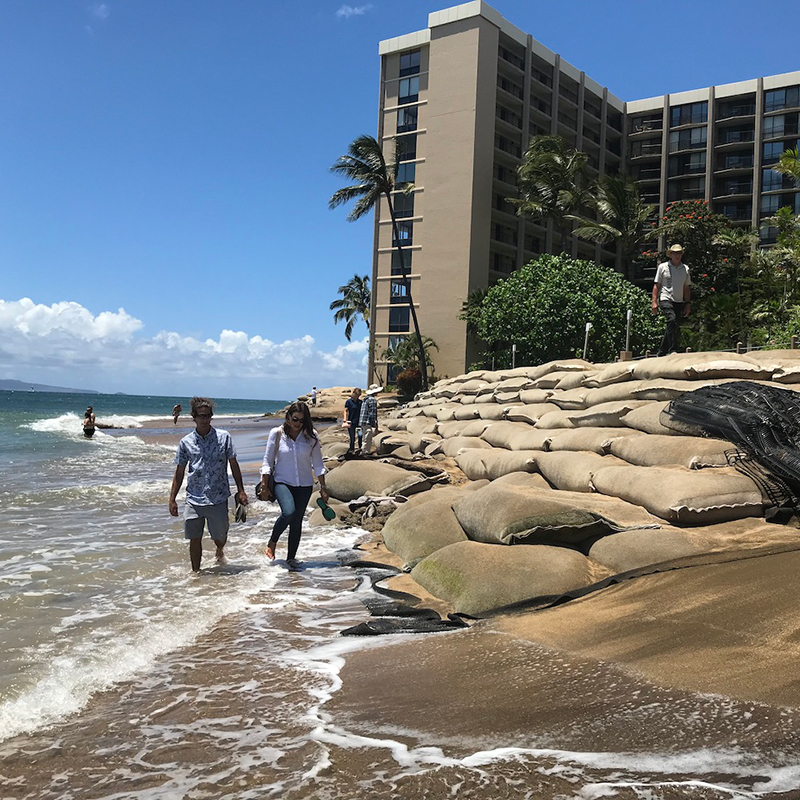
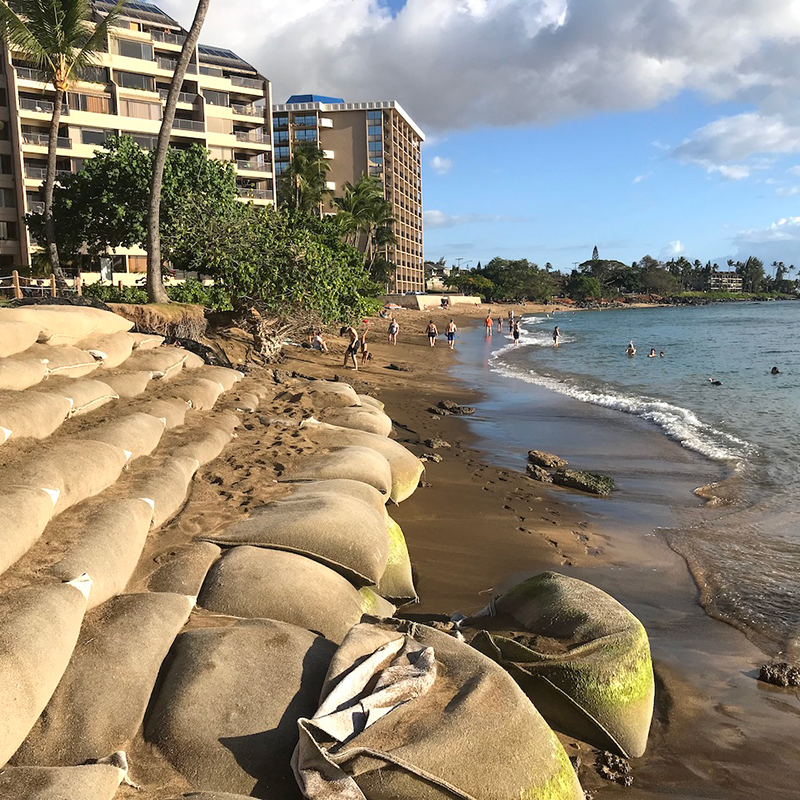
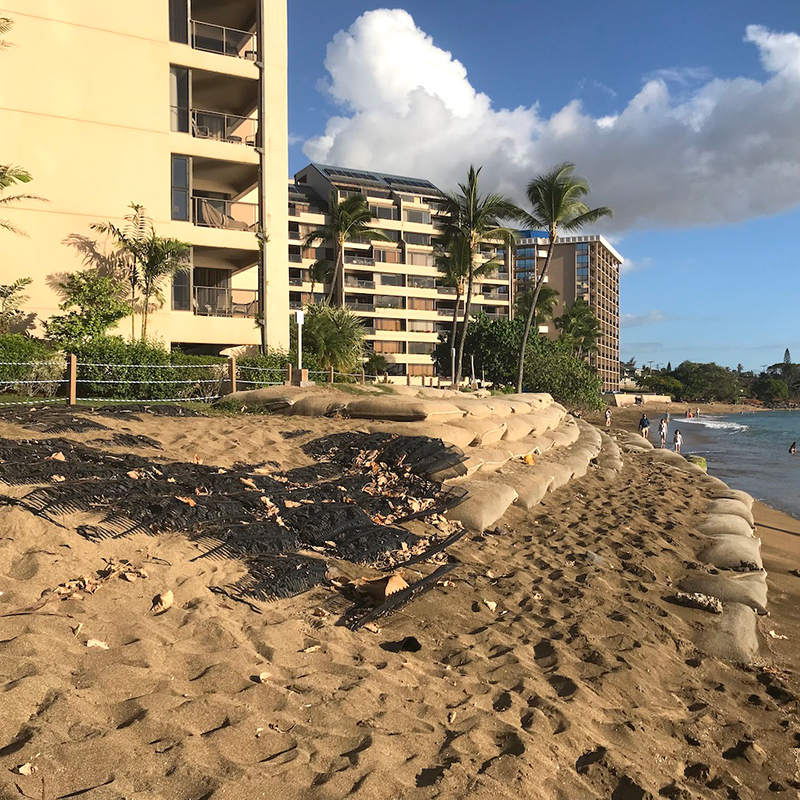
Kahana Bay on Maui is currently at an inflection point. For decades, sea level rise, strong wave action, coastal flooding, and shoreline development have transported sand and soils away from the Kahana coast. This erosion has resulted in shoreline recession; beach narrowing and loss of sandy beach area and sand dunes; a reduction in public access; and increased risk of natural hazards to the community, oceanfront resources, buildings, infrastructure, and amenities. Nine condominiums and one residential lot on the bay are collaboratively investigating long-term, regional solutions.
02
A more permanent solution
Oceanit was tasked with recommending an action and studying the impacts of this action in a Draft Environmental Impact Statement (DEIS). To protect the coastline, community, and public safety, it became apparent that a better way to address regional coastal erosion was through a community-driven approach, engaging many stakeholders across the community.
03
The Environmental Impact Study
The overall purpose of the project is to develop a sustainable and resilient approach to regional erosion along the Kahana shoreline, including efforts to:
- Explore, develop, and encourage a cost-effective, regional erosion mitigation solution for the Kahana shoreline that will minimize impacts to the sensitive coastal environment and enhance nearshore habitat while protecting existing habitable structures;
- Restore and preserve the sandy beach and offshore resources for cultural, social, and recreational uses, including ocean sports, food gathering, and passive enjoyment;
- Encourage shoreline protection that is compatible with natural and existing site conditions;
- Establish a design based on accepted engineering principles and best management practices;
- Propose a project that is compatible and consistent with federal, state, and county regulations, policies, and plans; and
- Develop a sustainable and resilient solution that withstands projected sea level rise while minimizing environmental impacts of required maintenance.
To learn more, visit the full Draft Environmental Impact Statement on the Hawaii Office of Environmental Quality Control website.
The Environmental Bulletin also features this DEIS on page three of this document.
Fact Sheets
Click the links below for summaries and quick information about various parts of the Kahana Bay DEIS.