
Hawaiʻi’s economy still appears stagnant: hotels booked months in advance, rental cars in short supply and millions of visitors passing through each year. But behind that familiar image, a quieter shift is taking place beneath the surface, challenging the idea that tourism is the state’s only future.
For years, Hawaiʻi has been defined by what it offers visitors. Now, educators, engineers and entrepreneurs say the state is beginning to redefine itself by what it builds. From engineering research to software and artificial intelligence, signs of a more diversified economy are emerging– often out of sight, and often misunderstood.
The change is incremental, not explosive. Hawaiʻi is not becoming Silicon Valley, and few expect it to. But data suggests the state’s technology sector is steadily growing, potentially reducing reliance on tourism.
According to the Hawaiʻi Department of Business, Economic Development and Tourism’s 2025 Targeted & Emerging Industries Update, the state’s technology sector accounted for about 32,540 jobs in 2024, representing roughly 3.6% of all civilian employment.
Over the past decade, technology jobs grew at an average annual rate of 1.5%, outpacing overall job growth statewide by 0.8%. By 2024, tech employment stood 17% above pre-pandemic levels.
Those numbers point to a sector that has quietly expanded even as tourism rebounded after COVID-19. But Jeff Hui, entrepreneur-in-residence at the UH Manoa Pacific Asian Center for Entrepreneurship (PACE), said interpreting that growth requires clarity.
“You would separate out technology jobs from technology companies,” Hui said. “Because you can have a technology job in a non-technology company.”
Hui works closely with university-affiliated startups and student founders, and his perspective reflects a broader reality, which is much of Hawaiʻi’s technical work primarily comes from applied engineering roles embedded in government, healthcare, defense and environmental research. Civil and mechanical engineering and ocean-related sciences have long been part of the state’s economy, even if they do not fit the popular image of “tech.”
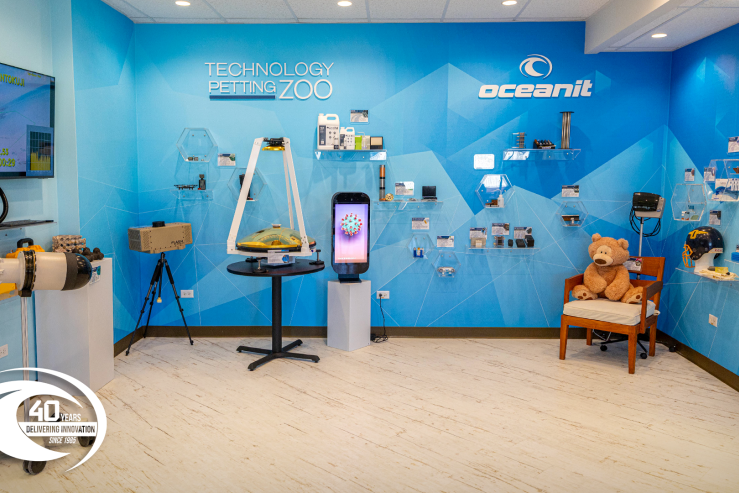
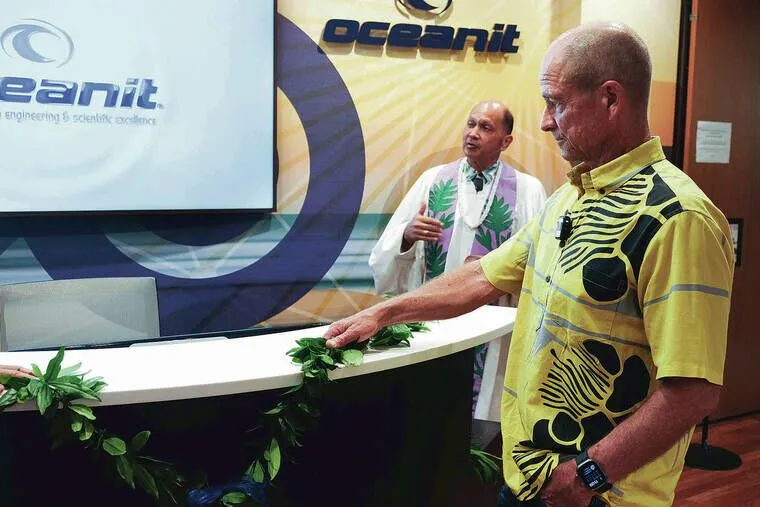
That quieter form of innovation can be seen at companies like Oceanit, a Hawaiʻi-grown engineering firm founded more than 40 years ago. The company specializes in advanced research and development, including biomimetics, or engineering inspired by natural systems.
“Over time it’s shown that people here in Hawaiʻi can create new ideas that can solve really difficult problems,” said Tarah Suiter, a senior engineer at Oceanit. “Tourism will always be important for Hawaiʻi’s economy, but we do need something besides tourism to be a healthy economy.”
Suiter’s work highlights the connection between island-made creative solutions and Hawaiʻi’s environment itself.
“There’s a lot of natural beauty and diversity here,” she said. “Because it’s such a diverse place, there’s a lot of innovation that comes along with that.”
Oceanit’s technologies have been used well beyond the islands, including systems that can remotely detect cracks in concrete infrastructure, some being ideas developed in Hawaiʻi but applied globally. For Suiter, that export of ideas matters as much as the technology itself, proving that Hawaiʻi can contribute to solutions far outside its borders.
Equally important, she said, is convincing young engineers they don’t have to leave to do meaningful work.
“There’s a big gap where talented people feel they need to go to the mainland and not come back,” Suiter said. “We want to show that you can have a fulfilling, innovative career here.”
That sense of limited opportunity has long shaped Hawaiʻi’s workforce. Many students earn STEM degrees only to leave for higher-paying or more visible tech markets. Hui sees that pattern most clearly in software-related fields, where Hawaiʻi has historically lagged behind traditional engineering.
Hui stressed that Hawaiʻi is unlikely to compete in building foundational artificial intelligence systems, which require enormous financial and computational resources.
“We’re just not going to compete there,” Hui said. “There’s only going to be two or three competitors there in the whole world.”
Where Hui sees opportunity is in building smaller tools and applications that sit on top of existing AI platforms, or products designed to solve specific problems rather than reshape the entire industry.
“That layer is great for Hawaiʻi,” Hui said, explaining that newer AI tools have lowered the barrier for students and small teams to build functional products. “When I started working here four years ago, students would have ideas, but very few of them were able to execute. But now they can actually build something.”
That accessibility has helped fuel a new wave of locally rooted startups, including Kahua AI, founded by former University of Hawaiʻi at Hilo student Bryce Lindberg. Lindberg said he was motivated to start the company after seeing mainland firms market AI services to Hawaiʻi businesses without understanding local needs.
“Seeing the lack of local tech companies paired with mainland companies reaching out to local businesses to offer services, it seemed like they just wanted to make money rather than help,” Lindberg said. “We have our roots in Hawaiʻi, why not make a company to help people here?”
Kahua AI builds custom AI-based software for local clients, and Lindberg said demand has increased steadily since the company launched six months ago. He believes AI can help Hawaiʻi’s smaller workforce by handling narrow, repetitive tasks rather than replacing workers outright.
“There are less people in Hawaiʻi,” Lindberg said. “So AI can perform smaller tasks while people continue to make the bigger changes.”
Still, growth comes with tension. Lindberg acknowledged skepticism toward technology in the islands, particularly from residents concerned about cultural preservation and environmental impact. Hui also raised a broader concern: that AI is already replacing many entry-level jobs worldwide, making it harder for new graduates to find traditional pathways into the workforce.
“Employment is falling pretty rapidly,” Hui said, noting that the trend extends far beyond Hawaiʻi.
Yet even that disruption, Hui argued, creates pressure to build locally rather than wait for outside opportunities. Hawaiʻi’s largest industries, especially tourism and defense, also provide something many startup ecosystems lack: a ready-made market.
“If we built a great tool that helped one of our local industries,” Hui said, “why not bring that to other industries as well?”
That idea reframes tourism not as an obstacle to diversification, but as a testing ground. Software, engineering and AI tools developed to serve Hawaiʻi’s unique needs can be refined locally, then scaled elsewhere.
For Suiter, the long-term question is not whether Hawaiʻi can move beyond tourism, but whether it can recognize the value of the talent already here.
“Hawaiʻi has everything it needs to lead in innovation- creativity, community and a deep respect for our environment,” she said. “The biggest resource isn’t the land or its visitors. It’s our people.”
As Hawaiʻi faces rising costs, workforce shortages and rapid technological change, its future may depend less on how many people arrive each year, and more on how many choose to stay and build something lasting.
This story was written by Andrew Smith for Ka Leo, and was published on March 6, 2026. Read the story here.