


2025 Pacific Operational Science & Technology Conference
Come visit Oceanit at the 2025 Pacific Operational Science & Technology (POST) Conference, hosted by NDIA and the U.S. Indo-Pacific Command.
Oceanit's team is excited to attend and exhibit at this unparalleled platform for collaboration, innovation, and exploration of Department of Defense (DoD) opportunities for joint research, development, and experimentation. We will be located at booth #1520 on March 3rd and 4th (Monday-Tuesday) during the open sessions and exhibit floor times. Visit https://www.postconference.org/schedule-glance to see POST's agenda at a glance.
- Mon, March 3 - Exhibit Hall Open: 9:30 am - 6:00 pm
- Tues, March 4 - Exhibit Hall Open: 9:30 am - 5:00 pm
Attendees can visit Oceanit and more than 60 other industry companies showcasing cutting-edge technologies and services. Explore our latest advancements and engage with Oceanit's defense, cyber, energy, and innovation experts in thought-provoking conversations - and ask about opportunities to visit Oceanit's downtown Honolulu offices and laboratories.


Increasing food supply while reducing food costs: A case for high-tech packaging
What if we told you that 30 percent of all harvested fruits and vegetables are “lost” during shipping to your local supermarket? This “lost” produce could be a result of spoilage, bacterial or mold growth, or bruising and lacerations during transport. 30 percent losses mean that for every two tomatoes that make it to supermarket shelves, one is thrown out. Or, since experts calculate that it takes about 3 gallons of water to grow a single tomato, it’s akin to pouring a gallon of water directly down the drain for every tomato that survives from farm to fork.
By 2050, the world’s population is projected to reach 9 billion, doubling the global demand for food. Yet, in 2010, this 30% loss equated to 133 billion pounds, or $161 billion worth of food, according to the USDA. These losses represent not only lost nutrition but also squandered resources in the form of water, energy, and labor spent growing, harvesting, and transporting this produce. Losing 1/3 of all produce between the farm and kitchen table is an incredibly large, yet solvable problem. Reducing this food loss would have an outsized global impact, including reduced food prices, increased food security, a smaller carbon footprint, and more resilient community supply chains.
Increasing Pressure of Food Scarcity on the Environment
Post-harvest food waste is a critical concern, especially as the agricultural industry struggles to meet increasing demands. As the population grows, the United Nations estimates that food production will need to increase by 60-70 percent by 2050 to support the world. However, with limited arable land, the agricultural industry must produce more from the same plots, leading to soil degradation and biodiversity loss. Expanding farmland could worsen these issues, resulting in deforestation and further environmental harm.
The increasing demand for produce also strains other natural resources, such as water and energy. According to the World Resources Institute (WRI), agriculture accounts for roughly 70 percent of global freshwater withdrawals, making it the largest consumer of freshwater worldwide. When 30 percent of fresh produce is lost in transit, the water used to grow that produce is wasted, while even more water is required to meet the rising demand.
Returning to our original example, it takes approximately three gallons of water to grow a single tomato and a staggering 449 gallons to produce a pound of rice. When food loss is examined at global production scales, the resulting water waste is staggering. In regions already facing water scarcity, such as parts of the Middle East, this waste exacerbates local shortages. The United Nations reports that four billion people experience severe water shortages for at least one month each year. Reducing water usage in agriculture and minimizing food waste is critical to sustaining global water supplies.
Additionally, the energy expended in planting, fertilizing, harvesting, transporting, and storing produce is significant. In the U.S. alone, the energy embedded in food loss is equivalent to approximately 300 million barrels of oil annually. Every step of food production and distribution contributes to global emissions, making food waste a contributor to climate change. Preventing post-harvest food loss would mitigate the environmental impact of agriculture by reducing unnecessary consumption energy and other resources.
Mitigating food loss will not only alleviate stress on resources but also directly benefit farmers by allowing them to sell more of their harvest, leading to increased income and reduced inefficiencies in the supply chain. With higher income, farmers can more easily adopt advanced technologies to further boost yields and improve farming efficiency. Additionally, reducing food loss benefits consumers by helping to stabilize or lower food prices, which is critical for low-income communities disproportionately affected by rising costs. By making food more affordable and accessible, particularly for vulnerable populations, these efforts contribute to enhancing food security and reducing economic inequality.
Climate Change and Post-Harvest Spoilage
Climate change is already significantly affecting food security through its impact on agriculture. Extreme weather events, such as hurricanes, floods, and droughts, devastate crop yields, while unpredictable temperatures disrupt growing seasons. Climate change also exacerbates post-harvest food loss through infrastructure damage. Severe weather events can delay shipments, damage roads, or disrupt ports, causing food to spoil before it reaches consumers.
As climate change intensifies, the frequency of these natural disasters will increase. Preventing food spoilage during transit by slowing the ripening process or protecting produce from environmental damage can help minimize the additional losses caused by delays.
How to Prevent Post-Harvest Food Loss
Post-harvest food loss is caused by various factors, including improper storage conditions, temperature fluctuations, and mishandling during transport. Current methods for preserving fresh produce rely primarily on refrigerated containers, known as reefers, which slow the ripening process by lowering temperatures. While effective for some crops, temperature control alone cannot stop the rapid ripening of climacteric fruits like bananas, avocados, and tomatoes. These fruits continue to ripen after harvest, producing ethylene gas that accelerates the process.
Oceanit’s RipeWrap
Oceanit’s RipeWrap offers a groundbreaking advancement over current preservation methods, providing an affordable and effective solution for preventing post-harvest food loss. Unlike traditional technologies, RipeWrap specifically targets climacteric fruits by capturing the ethylene gas responsible for ripening. This innovative packaging material works in real time to absorb or release inhibitors that regulate ripening. By controlling the ripening speed, RipeGuard helps extend the shelf life of produce, ensuring that fruits and vegetables arrive fresh and ready for consumption.
RipeWrap significantly reduces food spoilage and minimizes the waste of water, energy, and other resources used in food production. By slowing the ripening process, RipeWrap provides critical time to accommodate shipment delays or infrastructure disruptions caused by climate change, making it an ideal solution for regions prone to extreme weather events.
RipeWrap is a collaboration with Washington State University and the U.S. Department of Agriculture (USDA). This partnership aims to scale the technology and integrate it into global food distribution networks. The potential impact of RipeWrap on food security is substantial and promising, as it could reduce the 30 percent of produce lost post-harvest and help address the growing challenge of feeding the world’s expanding population.
As climate change intensifies and the global population continues to grow, ensuring food security has become one of the most critical challenges of our time. Inefficiencies in current food production and distribution systems have resulted in the unnecessary waste of resources such as water and energy, placing tremendous strain on the environment. By addressing post-harvest food loss through innovations like Oceanit’s RipeWrap, we can take a significant step toward reducing food waste, conserving resources, and meeting the increasing global demand for food.

Oceanit's CEO appointed to Hawaii governor's Advisory Committee on Marine Affairs
HONOLULU, HI, June 7, 2024 - Oceanit Founder and CEO Patrick Sullivan, Ph.D., PE, was among the new members announced this week as appointees to the Governor's Advisory Committee on Marine Affairs. Governor Josh Green had initially announced the committee's creation on Earth Day, April 22, 2024, with Governor Green designating David Karl, Ph.D., to serve as chair.
Patrick Sullivan joins 14 other distinguished individuals, each selected for their unique contributions from areas of Hawai'i government, business, education, and community-based organizations. The Advisory Committee on Marine Affairs, with its collective wealth of expertise, will guide and advise the State on the preservation, stewardship, and sustainable management of Hawaiʻi's invaluable marine resources, ensuring a promising future for our marine ecosystem.
"With Professor Karl's leadership, I am confident that these distinguished individuals bring invaluable expertise and commitment to the preservation of Hawaiʻi's marine resources," said Governor Green. "Their contributions will be crucial in guiding the state toward a sustainable and thriving marine ecosystem."
Read the Office of the Governor's press release here: https://governor.hawaii.gov/newsroom/office-of-the-governor-news-release-governor-green-announces-appointments-to-marine-affairs-advisory-committee/

Oceanit at the 2024 Offshore Technology Conference
Oceanit at the 2024 Offshore Technology Conference
6-9 May 2024 at Houston's NRG Park in Houston, Texas
Oceanit will be presenting at Houston’s Offshore Technology Conference, from May 6-9 at NRG Park. Oceanit will present multiple papers on the latest energy innovations and technologies from Oceanit Hawaii as well as Oceanit's H2XCEL Hydrogen Lab in Houston, TX. Speaker sessions scheduled include:
- Monday, May 6, Session 04 – 10:50: HeatX will be featured in, “High Temperature Compatible, Field-Deployable Heat Exchanger Nanocomposite Treatments” presented by Jake McHenry, ID 35384.
- Monday, May 6 - 11:30: Dr. Dylan Kobayashi will present, "Intelligent Robotic Heat Exchanger Maintenance & Non-Destructive Coating Inspection", ID 35464.
- Tuesday, May 7, Session 028 – 15:40: Dr. Ganesh Arumugam will be presenting on HydroPel in "Repurposing Existing Natural Gas Pipelines for the Transmission of Hydrogen," ID 35207.
- Wednesday, May 8, Session 033 – 11:10: DragX will be featured in, “An All-in-One Internal And External Coating Material For Enhancing Water Conveyance Pipelines” presented by Andrea Mansfeld, ID 35279.
Oceanit will also be presenting a Poster as part of the official OTC ePoster Lounge Part II proceedings, including a new Oceanit effort to create a Hydrogen transmission liner material: "Rethinking the Future of Hydrogen In Pipelines Using an Advanced Liner Material".
Since 1969, the Offshore Technology Conference (OTC) has served as a central hub convening energy professionals from around the world to share ideas and innovations, discuss, debate, and build consensus around the most pressing topics facing the offshore energy sector. Visit https://2024.otcnet.org/ to learn more about OTC 2024.


HeatX at the North American Refining Technology Conference
North American Refining Technology Conference (NARTC)
Oceanit’s Jake McHenry, Product Manager for HeatX, will be attending the World Refining Association’s Houston refining event from January 30-31. The 2024 conference focuses on connecting US refineries with the cutting-edge technologies that will determine the role of refining in the Energy Transition.
HeatX combines breakthrough science in Nanotechnology, AI, and Robotics to produce a step change in heat transfer operational efficiency. HeatX Delivers value to Power Producers, Refineries, and Heavy Industry around the Globe. You can visit https://www.heatxglobal.com/ to learn more and get in touch with us via [email protected] for more information.

2024 Oceanit Technology Showcase: Delivering the Future
2024 Oceanit Technology Showcase:
Delivering the Future as the Energy Industry's Most Trusted Innovation Partner
The exclusive Oceanit Technology Showcase is back! Join us on May 7th at 5:00 pm at Houston’s historic 1940 Air Terminal Museum for an evening of disruptive innovation. Situated near Houston’s Hobby Airport, the 1940 Air Terminal Museum is a preserved Art Deco building that once served the City of Houston as the Houston Municipal Airport. The terminal building is now a protected landmark and is listed on the National Register of Historic Places.
Held annually alongside Houston’s Offshore Technology Conference, the Oceanit Technology Showcase event will feature technologies that are shaping the future, from disruptive innovations to scalable turnkey solutions. Food and drinks will be provided.
At Oceanit, we embrace chaos to uncover opportunities for disruption, diversification, and to contribute to a better planet and human society.
Click here to RSVP for our exclusive 2024 event or scan the QR code below!

An invitation from Dr. Sullivan

Press Release | U.S. Army Awards KERTEX Phase II Support for Further Development of Keratin Textiles
- KERTEX is created from a specific, yet abundant bio-waste product: chicken feathers.
- Each year, the U.S. chicken industry generates more than 1.2 million metric tons of waste feathers.
- Taking its name from ‘Keratin’ and ‘Textiles,’ KERTEX is created from keratin, a fibrous protein that possesses unique structural properties.
Honolulu, HI August 14, 2023 | This week, the U.S. Army awarded Oceanit’s KERTEX performance textile phase II support to continue development, product prototyping, and eventual scaled production. KERTEX fabrics are being optimized to meet the Army’s high-wear military specifications for defense applications, initially for items such as apparel straps, vehicle seat covers, seat belts, and more.
Produced from keratin, a bio-polymer found in chicken feathers, KERTEX is a sustainable alternative to both petroleum-based synthetic fabrics, like polyester and seasonality-constrained, water-intensive natural fibers, like cotton. Keratin is among the toughest biopolymers, present in the robust structures of hooves and horns of animals.
Each year, the U.S. poultry industry generates more than 1.2 million metric tons of feathers as a byproduct of chicken production. These feathers contain the structural fibrous protein, beta-keratin, the building block of KERTEX. Beta keratin is extracted from the feathers and through a proprietary process are converted into fibers to be woven into KERTEX materials.
The production of KERTEX presents a roughly 50% carbon savings in production process emissions versus synthetic textile manufacturing like polyester. In addition, KERTEX also offers advantages over natural fiber fabrics, like cotton or hemp, in that it is not constrained by seasonality, weather conditions, or harvests.
The ample, nationwide byproduct supply of chicken feathers represents an excellent raw material opportunity for next-gen performance fabrics. KERTEX can be domestically sourced and produced, is environmentally renewing, and is robust and rugged enough for U.S. Army applications.
Oceanit’s KERTEX team is working to optimize raw materials sourcing, processing, and production, as well as developing a pipeline of textile partners all along the supply chain to support phase II work.
About Oceanit
Founded in 1985, Oceanit is a “Mind to Market” company that creates disruptive technology from fundamental science. Utilizing the unique discipline of Intellectual Anarchy, Oceanit reimagines innovation to break the bonds of normal and solve the impossible — delivering technologies to the market that impact humans and society. Oceanit’s diverse teams work across aerospace, healthcare, energy, and industrial/ consumer technologies, as well as on environmental and climate matters. Through engineering and scientific excellence, Oceanit transforms fundamental science into impactful, market-focused technologies used around the world.

Press Release | Coastal Adaptation Resource Planning Site Launched by Hawai’i Office of Planning and Sustainable Development (OPSD)
- Oceanit partnered with OPSD CZM to showcase over forty coastal adaptation strategies successfully employed in Hawai’i and around the world.
- The new resource was launched to raise awareness of options to address pressing climate- related changes to Hawaii’s communities and coastal environment.
- Oceanit’s Resilient Sustainable Engineering (RiSE) team has over 38 years of experience in responsible coastal resource management and stewardship.
Honolulu, HI July 27, 2023 | The Hawai’i Office of Planning and Sustainable Development (OPSD) launched the new ‘Guide to Coastal Hazard Adaptation Strategies’ resource website this week. The new website is a comprehensive resource that shares a range of coastal adaptation strategies for addressing climate change and sea level rise specifically for Hawaii’s unique conditions. The strategies include measures that have been used in Hawaii and in other coastal communities for shoreline protection, sea level rise accommodation, and managed retreat measures.
Some of Hawaii’s coastlines are facing chronic erosion and flooding from sea level rise. The state is unique from any other in the US – a state that lives with and respects the ocean – with no single point on land that is more than 30 miles from the ocean. This means the entire state is classified as coastal zone, from mauka (mountains) to makai (ocean) and stretching out into the territorial sea. The ocean is in Hawaii’s DNA, embedded in the culture, lifestyles, and values.
Proximity to the coastline makes Hawaii’s communities especially vulnerable to coastal hazards, such as big waves, storm surges, tidal flooding, and coastal erosion. The changing climate brings with it accelerating sea level rise, increasingly frequent and powerful storms, and heightened stress on aging infrastructure and resources. The new website was developed to engage all stakeholders on strategies for Hawaii’s dynamic coastal zones, from policymakers and professional engineers to homeowners and ocean recreation users.
“We were excited to collaborate with the State Office of Planning and Sustainable Development to develop this coastal adaptation resource,” said Dr. Patrick Sullivan, Oceanit’s CEO. “Our belief is that we’re not doomed by climate or sea level change if we work together and deploy healthy doses of science, technology and imagination. For nearly 40 years, Oceanit has been dedicated to supporting healthy ecosystems, where natural habitats and ecosystems work in concert with our communities and society.”
The Coastal Adaptation Strategies website presents the complex issue of coastal adaptation in an easily accessible format that is digestible for all audiences, including those that are new to, or unfamiliar with, coastal processes and/or the coastal zone regulatory system. The site provides basic information and hyperlinks to resource references, including authority agencies, that will enable stakeholders to learn more about old, new, and evolving coastal adaptation strategies. The site emphasizes that, when it comes to coastal adaptation, there is no one-size-fits-all solution. This resource is not an exhaustive list of ideas, nor does it incorporate every technology, like biomimicry-inspired reefs and advanced materials.
Coastal adaptation in Hawai’i pivots on the collaboration of federal, state, and local agencies – and the various parts of our local community. Cooperation is crucial to Hawai’i’s collective ability to preserve, protect, develop, and—where possible—to restore or enhance the resources of the coastal zone for current and future generations.
The new site builds off an already-existing framework for statewide collaborative management of Hawai’i’s ocean resources, known as the Ocean Resources Management Plan (ORMP). You can also learn more by visiting https://planning.hawaii.gov/czm/.
Click here to visit the Hawai’i Coastal Adaptation Strategies website.
About Oceanit
Founded in 1985, Oceanit is a “Mind to Market” company that creates disruptive technology from fundamental science. Utilizing the unique discipline of Intellectual Anarchy, Oceanit reimagines innovation to break the bonds of normal and solve the impossible — delivering technologies to the market that impact humans and society. Oceanit’s diverse teams work across aerospace, healthcare, energy, and industrial/ consumer technologies, as well as on environmental and climate matters. Through engineering and scientific excellence, Oceanit transforms fundamental science into impactful, market-focused technologies used around the world.
IN THE NEWS | Oceanit Partners on $9M NOAA Grant to Restore Coral Reefs
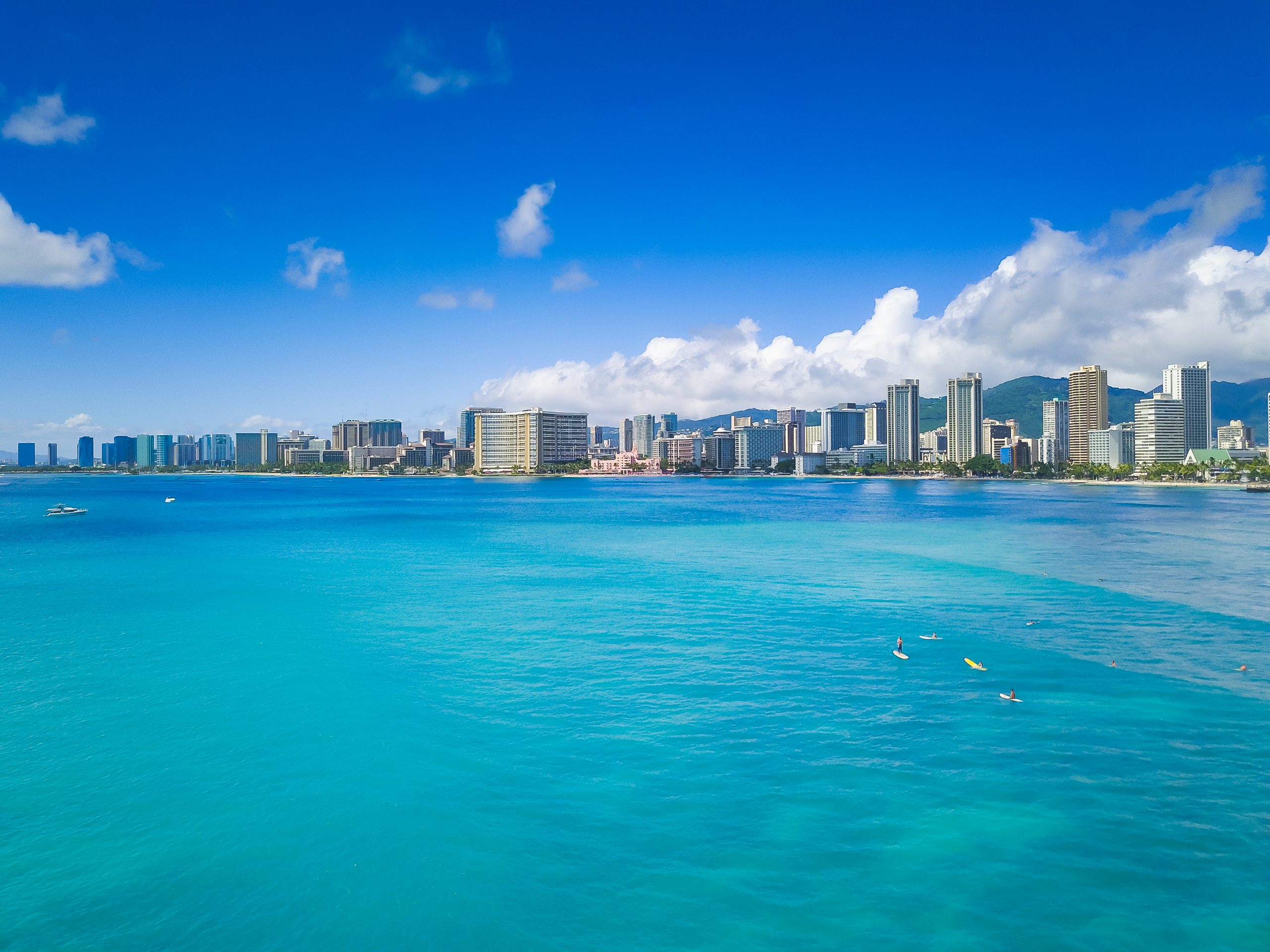
Honolulu, HI April 25, 2023 | Oceanit’s RiSE team is part of a new coral reef restoration project that will build coral nurseries off Oahu’s iconic Waikīkī Beach. Led by Conservation International, the “REEFrame” project is a partnership that includes the University of Hawaiʻi at Mānoa, Oceanit, the Hawaiʻi Division of Aquatic Resources, Natrx, and workforce development nonprofit ClimbHI.
The REEFrame team will receive $9 million from the National Oceanic and Atmospheric Administration (NOAA) Office of Habitat Conservation to restore the severely degraded coral reefs near Waikiki via permanent coral nurseries on 3D-printed concrete reef frameworks. The project will run for three years, completing in mid-2026, and will build off coral reef research already underway at University of Hawaiʻi’s labs, Oceanit’s RiSE team, and elsewhere.
Oceanit has been active on projects covering coral restoration, reef habitat construction, and coastal erosion mitigation since the 80s, and currently are working with U.S. Defense Advanced Research Projects Agency (DARPA) on project CORAL: Carbon-negative Ocean Reef for Aquatic Life.
Oceanit’s CORAL project with DARPA is working towards the creation of biomimetic reef habitats from carbon-neutral concretes, potentially using 3D printer–enabled techniques to establish and promote coral growth, and to restore fragile marine ecosystems. Sustainable, carbon-neutral/negative concrete alternatives could be the “blue-green” option to replace “gray” coastal infrastructure and be used to foster reef regeneration and wildlife diversity.
The use of biomimetics, or biomimicry, means drawing inspiration, and taking lessons, from the natural world to better inform how our engineers can design to solve critical global problems, such as coral habitat loss, sea level rise, and the resulting coastal erosion and other hazards.
“Many reefs in the region are now so degraded that there is little living coral, collapsing to the point where they no longer provide shelter for fish,” said the REEFrame science lead Mark Hixon from UH Mānoa’s School of Life Sciences. “Unfortunately, many reefs around Oahu and other highly populated Hawaiian Islands now have few parrotfish and other seaweed eaters. Our reefs are in danger of being lost to ocean warming unless we help them recover with these interventions.”
Oceanit is responsible for the implementation and deployment of REEFrame: conducting engineering assessments for the coral nursery design, completing all environmental assessment work, developing the engineering plans for REEFrame’s construction, managing permitting, and finally leading the installation of the coral nursery in the ocean off Waikīkī.
“Oceanit will bring decades of coastal engineering and ecosystem experience, combined with deep science and technology capabilities, to deliver new ideas, technologies, manufacturing and deployment methods to the problem,” said Oceanit President and CEO, Dr. Patrick Sullivan. “We see an opportunity to upgrade techniques that deal with coastal ecosystems that have been locked in old practices and paradigms. The new methods and materials available today present an entirely new tool set to deal with coastal and ecosystem impacts. This gives us optimism on how we deal with climate impact to precious coastal ecosystems moving forward.”
Success of the NOAA REEFrame work will have profound implications on scaling the approach from Hawai’i to the world – 70% of which is covered by ocean. REEFrame could serve as a blueprint for restoration projects around the Hawaiian Islands, where corals are being impacted by runoff, sea level rise, sunscreens and other chemicals, intensifying storm events, and more.
“If we want to save Hawai’i’s disappearing beaches, we must do more to save our dying coral reefs,” added Dr. Mike Foley, Sr. Coastal Engineer at Oceanit. “Think about it: Where does all that beautiful white beach sand come from? It’s a gift from the ocean and without a healthy reef ecosystem, I’m afraid we will never reverse the trend of beach loss in Hawaiʻi. This project is an important step forward in how we sustain our precious coastal environment for the enjoyment and benefit of future generations.
Since the 1980s, Oceanit’s RiSE Team have been on the cutting edge of resilient and sustainable engineering. Their work has included research on engineered ecosystem and habitat design, using sustainable materials, diverse surface textures, and biomimetic geometries. The team is excited to bring a disruptive innovation methodology to the project, working to solve environmental problems with far more than traditional civil engineering techniques.

Oil and Gas Upstream Podcast: Patrick Sullivan Joins Host Elena Melchert
Oceanit CEO Dr. Patrick K. Sullivan joined the Oil and Gas Upstream Podcast and host Elena Melchert this week to share some of Oceanit’s newest energy innovation stories and the mindset that empowers the creation of new, disruptive technologies.
In the episode, Melchert and Sullivan discuss Oceanit’s ethos as a “mind to market” technology company, and Sullivan shares insights from his book Intellectual Anarchy: the Art of Disruptive Innovation.
The mindset of Intellectual Anarchy has led Oceanit to address climate issues, energy, hydrogen, and decarbonization, under an initiative called EDGE: Energy Decarbonization for the Global Environment. Dr. Sullivan shares his thoughts on why the climate crisis is the defining issue of our era, and why Oceanit firmly believes that with the determination to marshal science, technology, and engineering — as well as a willingness to discover, explore, and deploy disruptive innovations — we can make a difference and leave the world on a better course for the future.
Elena Melchert is a former director for the Upstream Oil and Gas Research Division at the U.S. Department of Energy (DOE). She was a Program Manager at the DOE from 1990–2013, and led the development of several DOE technology research plans and programs including: Advanced Drilling, Completion and Stimulation Research Program Plan, and the Offshore Technology Roadmap. From 1995-2000, she served as the Department of Energy’s U.S. Coordinator for Natural Gas in the Western Hemisphere under the President’s Summit of the Americas/Western Hemispheric Energy Initiative. In 2001, she served as a member of the Senior Professional Staff for oil and gas technology at the Executive Office of the President of the United States/National Energy Policy Development Group, and provided subject matter expertise for the President’s National Energy Policy.
You can listen to the episode at the websites listed below:
The Oil and Gas Upstream Podcast explores what is happening in the upstream oil and gas industry. Host Elena Melchert brings value, unity, and information to the energy industry one conversation at a time. Guests of this show bring stories from various sectors of the industry.

Oceanit Becomes a Sponsor of the Trust for Public Land
Oceanit is accelerating into 2023 by becoming a proud partner of the Trust for Public Land, and the first organization to join TPL’s Corporate ‘Ohana program’.
The Trust for Public Land (TPL) is a national organization that works on conservation and public access projects throughout the United States. They believe in creating parks and protecting land for all people to ensure healthy, livable communities for generations to come – a vision that Oceanit shares.
The four pillars of commitment that drive TPL’s work are Equity, Health, Climate, and Community. Equity focuses on driving down the disparities in park access that exist along racial and economic lines. Health is TPL’s commitment to building quality ‘close-to-home’ park access to improve social, physical, mental, and environmental health. Climate considers how parks and green spaces intersect with resilience against flooding, drought, heat, and other effects of climate change. And lastly, Community is TPL’s mission to build stronger, more connected societies through open space.
Since 1985, Oceanit has been dedicated to protecting and sustaining coastal ecosystems and communities through our work in responsible and innovative engineering, science, and technology – a mission that perfectly aligns with the work being done by TPL.
TPL has many ongoing projects around Hawaii, including their recent skate park event at A’ala Park near downtown Honolulu in December 2022, which Oceanit attended. The A’ala Park work is the inaugural effort in a broader project that TPL is undertaking, called ‘Parks for People’. Under Parks for People, TPL will work with stakeholders in the areas surrounding parks, employing a collaborative grassroots community-based participatory redesign process, bringing together residents, park users, and local businesses to build a shared vision for the future of each site.
As a new sponsor, Oceanit has been invited to participate in TPL’s annual community workday, which is held each year on Earth Day, April 22. The workday will take place at Kahuku Point (Kahuku Kawela) on O’ahu’s North Shore, where TPL has successfully conserved 630 acres of coastal area surrounding Turtle Bay Resort. The historic conservation agreement was signed on October 2015, ensuring this stretch of irreplaceable and undeveloped shoreline will remain that way forever.
The Oceanit Ohana will send twenty employees to join TPL on Earth Day, working to clean up and preserve Kahuku Kawela lands. The group will work to remove invasive species, plant new native plants, and perform other tasks that help to restore the coastal dune ecosystem for birds and wildlife.
Visit https://www.tpl.org/ to support the Trust for Public Land and learn more about their ongoing work. You can also find them on Facebook, Instagram, LinkedIn, Twitter, and YouTube:
- https://www.facebook.com/TheTrustforPublicLand/
- https://www.instagram.com/trustforpublicland/
- https://www.linkedin.com/company/the-trust-for-public-land/
- https://twitter.com/TPL_org
- https://www.youtube.com/user/TrustforPublicLand

Empowered Hawai'i: Oceanit Shares Homegrown Climate Technologies
This week, Oceanit CEO Dr. Patrick K. Sullivan joined the hosts of KHON2’s Empowered Hawaii to share some of Oceanit’s newest energy innovations being created right here in the islands. In the episode, “Homegrown Solutions”, hosts Jeff Mikulina and Kelly Simek explore how Oceanit and several other Hawai’i companies are working to solve our global climate crisis.
Mikulina and Simek visited Oceanit’s office and laboratories in downtown Honolulu to see the latest disruptive solutions in hydrogen, nanotechnology, artificial reefs, and more.
Sullivan told the hosts, he believes the scale of our climate challenge requires radical new solutions and novel ways of thinking. While many experts around the globe work on our climate challenges, Oceanit is doing its part by bringing disruptive innovations to life here in the islands – solutions that can help solve global sustainability challenges. Sullivan shared insights on HydroPel and HALO, two technologies which will enable to broader use of clean-burning Hydrogen fuel. He also shared our work on CORAL, a carbon-neutral concrete technology, which will help cut emissions from what is now a carbon-heavy production process.
In addition to Oceanit, the episode includes interviews with some of Hawaii’s other disruptors who are developing homegrown solutions to make our islands—and the world—more sustainable.
You can view the episode below, or by visiting KHON’s website.

EDGE Technology Showcase 2023: Delivering the Future
EDGE Technology Showcase 2023:
Delivering the future through disruptive innovation for energy, society, and sustainability.
Join us on May 2nd at 5:00pm for Oceanit’s 2023 EDGE Technology Showcase, returning to Houston at the historic 1940 Air Terminal Museum near Houston’s Hobby Airport. The 1940 Air Terminal Museum is a historic art deco terminal building that once served the City of Houston as the Houston Municipal Airport. The terminal building is now a protected landmark and listed on the National Register of Historic Places.
Held each year alongside Houston' Offshore Technology Conference, Oceanit's EDGE Technology Showcase event will feature technologies that are delivering the future, from deep sea to deep space — from disruptive innovations to scalable turnkey solutions.
At Oceanit, we seek out chaos to uncover opportunities to disrupt, diversify, and work for a better planet and human society. In 2023, Oceanit will unveil bleeding edge products and services that have the potential to cost-effectively improve efficiency and sustainability to the energy industry. Oceanit will demonstrate the latest technologies related to energy efficiency, circular economy, hydrogen, decarbonization, methane emission, beneficial reuse of produced water, and more – technologies aimed at transforming the way we engage in climate challenges through the lens of EDGE: Energy Decarbonization for the Global Environment.
EDGE is Oceanit’s initiative that addresses an array of next-gen energy challenges like carbon sequestration, new energy sources like green hydrogen, energy efficiency, and predictive and prescriptive maintenance. EDGE examines the entire ecosystem – from exploration and production, through transmission, storage, and distribution, to carbon sequestration and new energy paradigms. In addition, Oceanit will share a range of new innovations in artificial intelligence, aviation, and much more.
To RSVP, scan the QR code below or click here: https://OceanitEDGE.rsvpify.com
