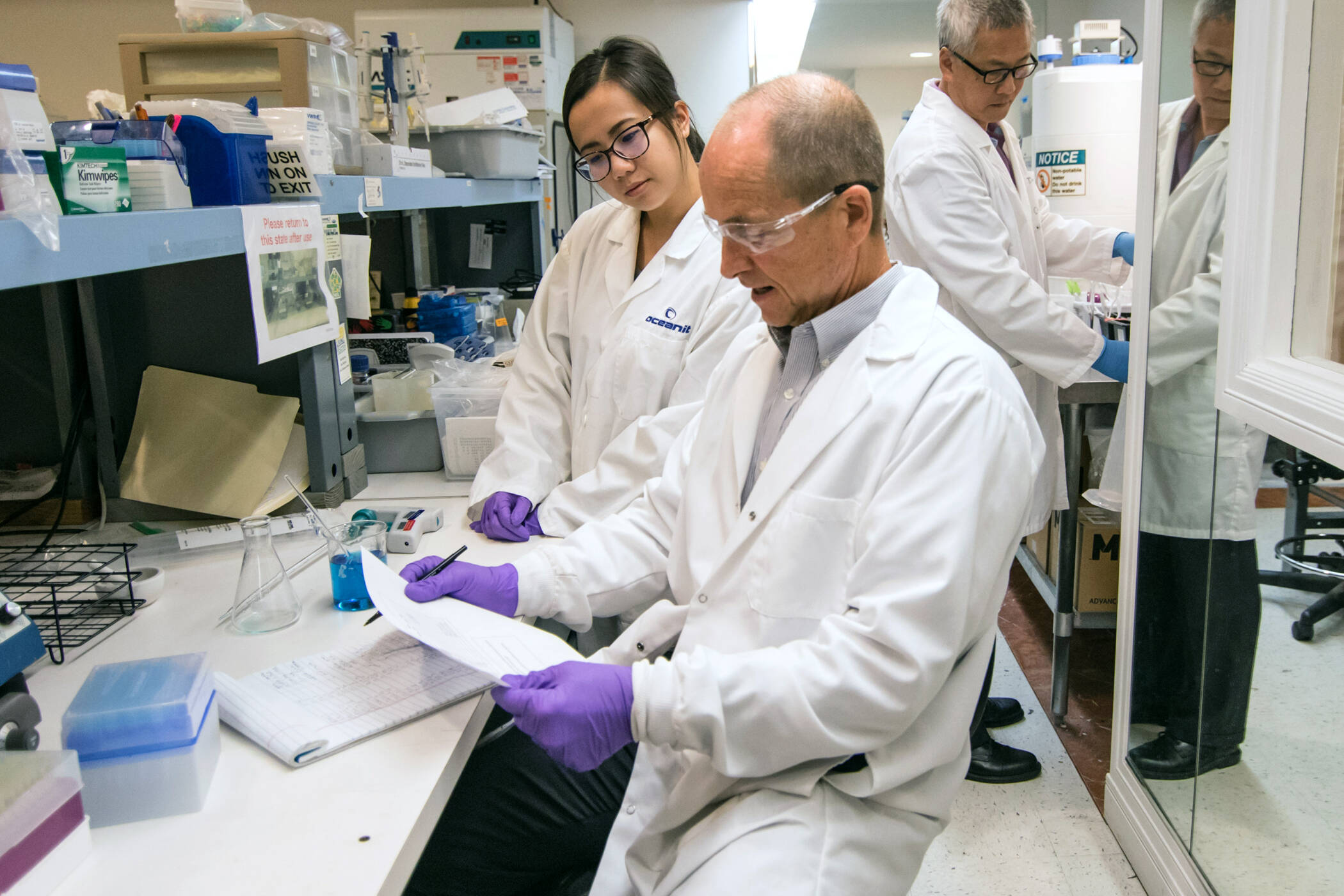

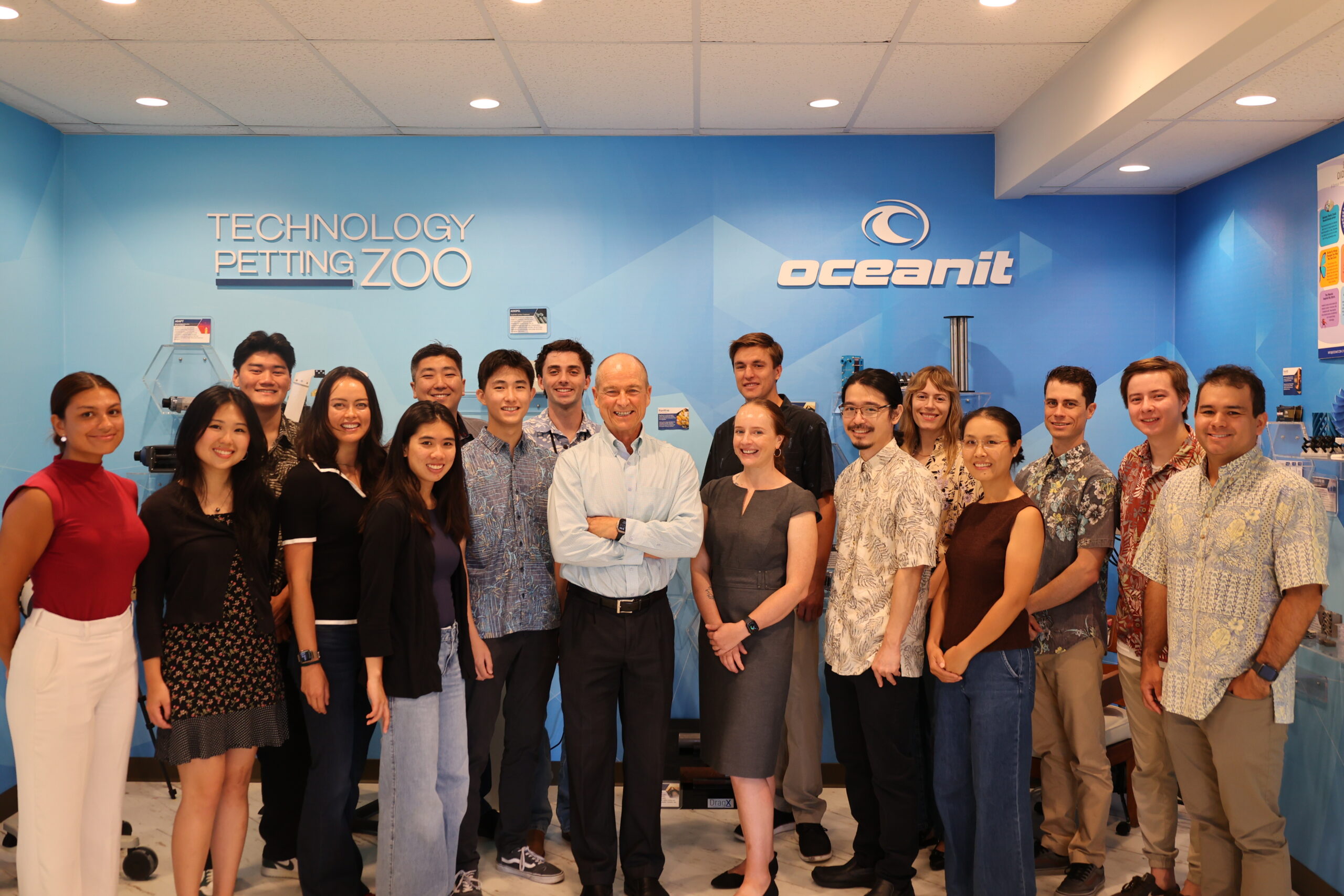
Four University of Hawaiʻi at Mānoa College of Engineering students put their skills to work this summer, developing solutions to challenges ranging from invasive species to disaster response through Oceanit’s Future Innovators Program.

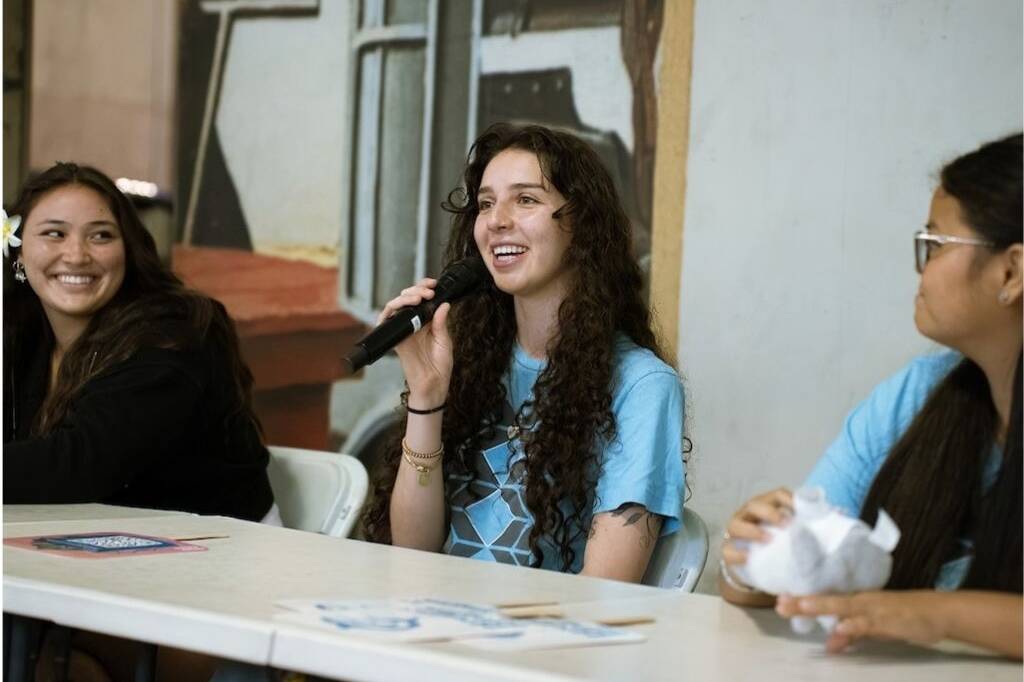
The students were among eight interns who completed the 12-week program, which culminated in the 2026 Oceanit Intern Innovation Summit on August 12 in Honolulu. Each intern presented an individual project and received feedback from judges Jeff Hui, entrepreneur-in-residence at UH Mānoa’s Pacific Asian Center for Entrepreneurship (PACE), and Sherry Menor, president and CEO of the Chamber of Commerce Hawaiʻi.

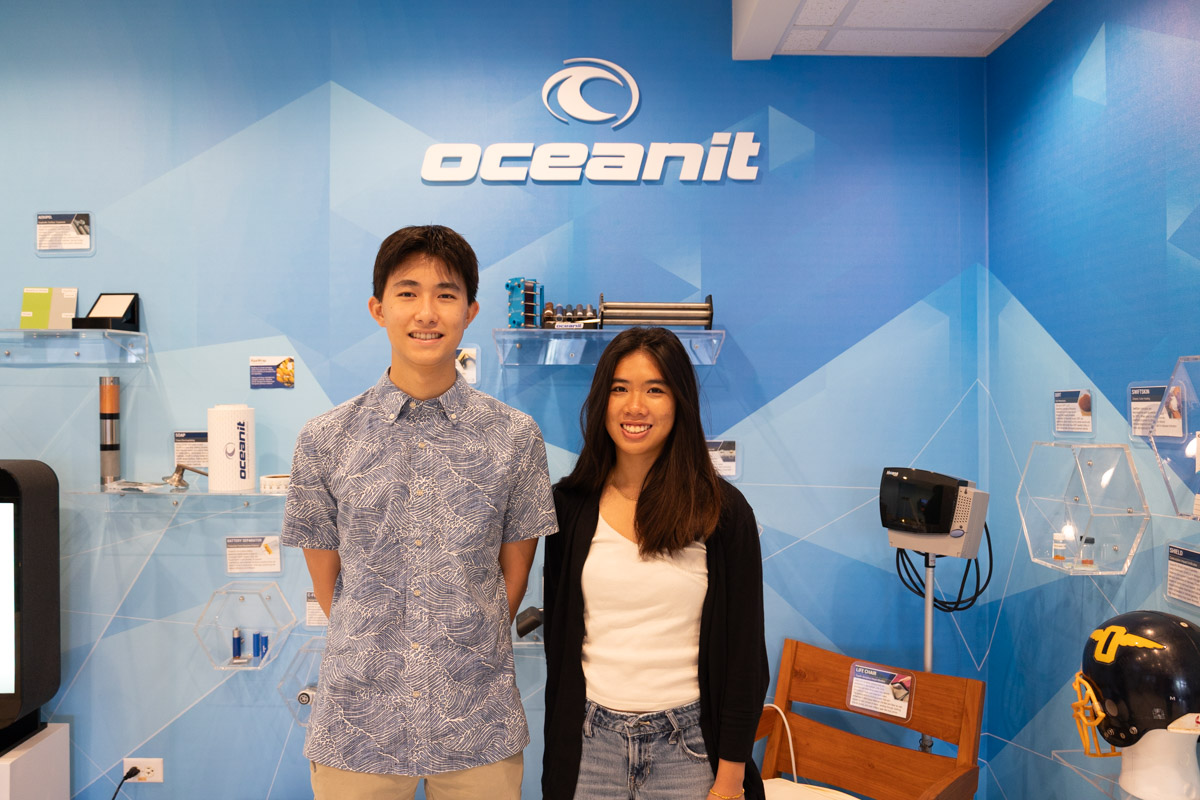
Representing UH Mānoa were engineering students:

  • Jacob Bergeron
  • Kristen Chang
  • Jason Yee
  • Shelby Dixon

Engineering solutions to real-world challenges

Dixon developed TRACE-CRB, a low-cost acoustic sensing system designed to detect coconut rhinoceros beetle activity hidden inside mulch. The project explores whether contact vibrations and signal processing could help field crews narrow down where beetle larvae may be located before digging.

“The most rewarding part was watching an idea go from something I was sketching out and questioning to an actual working prototype that I could put in front of people and explain,” Dixon said.

Chang developed MITE, a concept for a swarm of small devices that could be deployed into inaccessible rubble following disasters. The devices could help search-and-rescue teams detect signs of life, map voids and relay information back to rescuers.

“The experience changed my perspective on what I’m capable of contributing as a young engineer and made me much more confident to keep pursuing ideas of my own,” Chang said.

Bergeron, a mechanical engineering graduate student, developed a new type of jack stand designed to address stress caused by uneven surfaces during home vehicle repairs.

Yee developed a water-bottle filtration concept for humanitarian aid.

Building skills beyond the classroom

Both Chang and Dixon credited their experiences at UH Mānoa with preparing them for the internship. Chang pointed to her technical background, involvement in projects and clubs, and conversations with professors. Dixon said her coursework helped her work across hardware and software while learning how to approach unfamiliar problems.

“One of the biggest things I learned is that engineering is not just about getting something to work, but it is about understanding why it works well enough to explain it, defend your decisions, test your assumptions, and improve it,” Dixon said.

This story was published on August 18, 2026 by University of Hawaiʻi News.

Sign up for our newsletter


The Oceanit logo in white

Honolulu
828 Fort Street Mall
Suite 600
Honolulu, Hawaii 96813
(808) 531-3017

Houston
8402 Scranton Street
Houston, Texas 77061
(713) 589-9665

Let's connect

Privacy Preference Center