
Honolulu, HI, November 18, 2025 – Everybody has gotten some of their favorite fruits from the grocery store just for them to spoil before you can fully indulge in nature’s natural sweets — and it’s not a fun feeling.
Not only did you waste your hard earned money, but you also didn’t get to savor the flavors of your favorite mango, guava or papaya.
But what if that didn’t have to be the case?
Scientists at Oceanit, a Honolulu-based tech company that makes new technologies in the islands for the world, created a solution for that: RipeWrap.
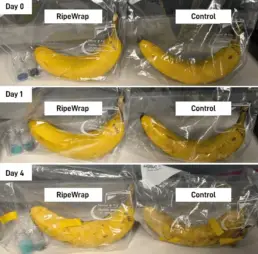
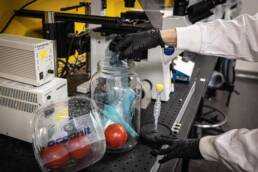
Dr. Kathryn Anderson, one of Oceanit’s senior scientists, drove the research forward to develop a plastic wrap that helps delay the ripening — and spoiling — process that naturally occurs in fruit.
“The ripening, it’s this enzymatic process, and it’s triggered by a gas that the fruit emits called ethylene, and the fruit produces it itself,” Anderson said. “By removing the ethylene, the packaging absorbs it and takes it away from the fruit, and that puts the ripening into a slow motion process. So we’re slowing down the ripening.”
Supported by the USDA, the RipeWrap technology is then applied to different mediums of fruit packaging, which can be placed near the fruit. It can be a plastic wrap, box or sticker that is near the fruit in its packaging, lengthening its shelf life by up to 10 extra days.
“RipeWrap freezes time and delays the ripening,” Anderson said.
Fruits of all kinds can benefit from RipeWrap’s technology, such as tomatoes and avocados, but Hawaiʻi’s tropical fruits like mangoes and papayas would see a great benefit as those fruits tend to spoil faster naturally.
“There actually are no solutions that exist today based on this technology in a film packaging format. They may have sachets and stuff that they put nearby [fruits], but this could be used from transport, where they’re doing storage and then treatment, all the way to the shipping process,” Anderson said. “It can be used to protect the fruit.”
RipeWrap is made locally, with Oceanit partnering with Hawaiʻi-based label printers to make the film by the thousands.
In addition to RipeWrap’s ability to be made locally, the product is also biodegradable, providing farmers and consumers with sustainable options for keeping their fruit fresh.
For small local farmers like Noe Neumann of Lokoea Farms in Haleʻiwa, RipeWrap can make a significant impact on her business. Farmers like Neumann have more wiggle room when RipeWrap slows the spoilage of her crop.
In particular, Neumann’s guavas are a bit of a hassle for Lokoea Farms, given the short shelf life of the fruit.
“We grow very limited amounts of guava because even though it sells for a good price, if you look at the overall cost of production with everything from picking it… to very gently storing it so it doesn’t get bruised, and then packaging it… and then selling it, it just has a really short time window for us to be able to sell it,” Neumann said. “So then we end up having to waste a lot of it, and we don’t make as much money as we could.”
People want guava. It’s a bit of a tougher find at the supermarket, and Neumann wants to be able to provide that fruit to consumers.
“If we could somehow extend the life so that it wouldn’t have to be, we wouldn’t have to be quite so fragile with it,” Neumann said. “The demand is there, for sure. It’s just figuring out a way to make it economical for us to grow it, and for it to last long enough to get to the final consumer with good quality.”
Lokoea Farms is known for the delicious Haleʻiwa Gold Oranges, but guava is another claim to fame for them, and RipeWrap can help get their famed fruit to the masses.
“[Guava] is probably one of the things, other than citrus, that we’re the most well known for, and I have a lot of customers, restaurants and bakeries who are calling and asking about guava,” Neumann said. “Guava, guava. People love the guava.”
RipeWrap’s availability also brings other factors, such as shipping, into play. It’s one thing for Lokoea Farms to sell to their customers on the North Shore, but RipeWrap opens the door for local farms to sell to interisland customers — and even customers on the continent and beyond.
Fruit can spoil pretty quick in transit, and preventing that spoilage can help share the flavors unique to Hawaiʻi with the world.
“Hawaiʻi is the only place in the US where we can grow a lot of this tropical fruit that’s more exotic. There are so many different kinds of fruit in the world that people have never tried before, and would be really excited to try, and would pay a premium price for, especially if grown in Hawaiʻi,” Neumann said. “I think if we can figure out a way to get these premium, amazing, very rare tropical fruits to consumers… Hawaiʻi’s agriculture industry has the possibility to thrive again.”
The project looks to minimize the number of fruits that spoil before they reach consumers, with Oceanit reporting 30% of fruits go bad in transit.
Dr. Tarah Sullivan Suiter, a senior engineer and team leader at Oceanit, said that Hawaiʻi’s exporting market is currently limited, but with the help of RipeWrap, that market can expand and even provide a more affordable option for domestic buyers.
“Agriculture could grow even more here in Hawaiʻi,” Sullivan Suiter said. “I think everyone can recognize it’s becoming more expensive to buy produce, and if we can produce more here for our own population, then we can hopefully make things more affordable for people and create a more self-sustainable agriculture system here in Hawaiʻi.”
With the support to the local agriculture industry, Anderson’s invention looks to change the world’s farming scene and help those who really need it: local farmers and consumers.
“As a small farmer, we’re trying our best. None of us are making money. We’re all surviving, but we are trying our best to provide food for people that live here,” Neumann said. “Anything that we can do to make it more efficient or streamline our production so that we are able to produce the same or more food with less work or less time, that’s always going to be a positive.”
(Article by Cameron Macedonio, KHON2, This locally made fruit packaging ‘freezes time,’ lengthening shelf life)