Women in Hawaiʻi can have flourishing careers in STEM thanks to this lab at Oceanit
HONOLULU (KHON2) — Science does not only live in faraway labs or big mainland cities. Science at Oceanit does not hide behind closed doors or distant campuses.
It is built in Honolulu by people from the islands and all over the world. It lives in families, classrooms and careers that begin in Hawaiʻi and reach the world.
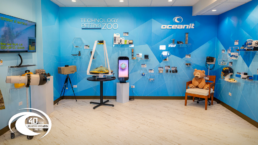
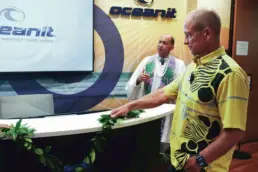
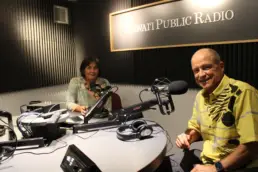
Jennifer Oliver, marketing manager for Oceanit, said science shapes everything the company does. She explained that Oceanit is a science and technology company based in Honolulu that works across engineering, material science and chemistry, coastal engineering and more. The company serves public and private clients, including work connected to defense.
“Science is at the core of everything that Oceanit does,” Oliver said.
Oceanit also stands out for who does the work.
Women in the numbers
On International Day of Women and Girls in Science, Oliver said the day matters because it shows what is possible.
“One of the first things that I was really excited about when I joined the company was how many women were here,” she said.
At Oceanit, she said 35 percent of engineers and scientists are women and that thirty percent of employees with PhDs are women. Oliver noted that women make up about 15 percent of the U.S. engineering workforce.
“So, we’re at 35, which is well above,” she said. For PhDs in STEM fields, she said women often range from 30 to 40 percent.
Oceanit’s workforce reflects Hawaiʻi in more than location. It reflects where people began and why they chose to return. The company’s focus on building talent from Hawaiʻi shows up clearly in who fills its labs and offices.
“[A lot of the staff] were born here. They went to school here,” Oliver said. Some left for college or a PhD and came home.
Building a local pipeline
At the center of Oceanit’s mission is a long-term commitment to growing scientific talent in Hawaiʻi as they tie scientific opportunity directly to Hawaiʻi’s future and its economic strength.
“We really believe in building that STEM pipeline from Hawaiʻi,” Oliver said. She added that the goal is to bring talent back because it helps the economy.
The company partners with the Chamber of Commerce of Hawaiʻi and works with Girl Scouts of Hawaiʻi. Oceanit volunteers at STEM and STEAM events where many local women engineers and scientists bring their children.
“It becomes like a family event,” Oliver said. “Being a young mother and also having a demanding job for anyone is really hard.”
Science inspired by nature
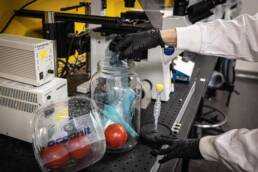
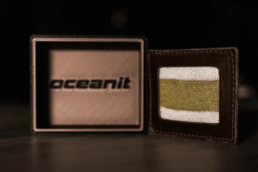
Oliver highlighted senior scientist Tarah Sullivan Suiter, who has a PhD in biomimetics and leads teams while raising a young family. Sullivan works on KERTEX technology, which turns chicken feather waste into fiber. Her work began with defense uses and now draws interest from fashion and athletic companies.
“She leads a big team,” Oliver said.
At Oceanit, ideas do not linger in theory. They move straight into hands-on experimentation, which allows the distance between imagination and experimentation to be intentionally small at Oceanit.
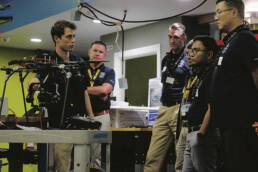
“Our labs are right downstairs,” Oliver said. “You can actually go and watch our scientists do these things.”
Seeing it and doing it
Oliver said visibility matters most for girls, as she wants young people to know they can build science careers at home.
“If girls see it, then they can believe it, and then they can do it,” she said. “There’s places like Oceanit here in Hawaiʻi that they can come back to.”
Oceanit offers internships and full-time roles, and many interns move into permanent jobs.
“We have a great internship program. It’s actually live,” Oliver said. “If there are young girls who want to be a part of our internship program, we would definitely encourage them to apply. A lot of our girls here that were interns also transitioned into full-time roles here. So there’s definitely a pipeline there.”
You can click here to learn more about Oceanit and the internships they offer.
For Oliver, the message is personal: “I work here because I hope to rub off a little bit on my kids,” she said. “Letting them know that they can do these types of things here in Hawaiʻi and they don’t have to go away for work.”
This story was written by Sandy Harjo Livingston and Cameron Macedonio for KHON2 and published on Feb. 11, 2026.